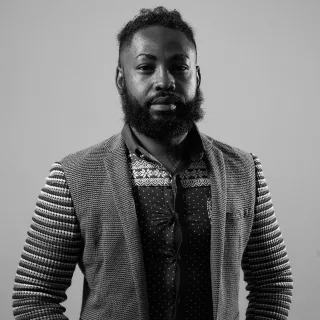
Today, September 1, 2026, marks a generational shift at the world's most valuable technology company. John Ternus officially becomes Apple's fourth CEO, succeeding Tim Cook in a transition that was announced in March 2026 and has been carefully orchestrated over the past six months. For the estimated 8,000 to 12,000 active iOS and macOS developers in Singapore, and for the employers who hire them, this is not a symbolic changing of the guard. It is a strategic inflection point that will reshape what Apple builds, how its ecosystem evolves, and which developer skills command premium compensation in APAC.
Ternus is not a finance executive or an operations specialist. He is a 23-year Apple hardware engineering veteran who personally led the transition from Intel to Apple Silicon — the M1 through M5 chip family that redefined what personal computing hardware could do. He oversaw Vision Pro development. He drove the integration of the Neural Engine into every Apple chip, making on-device machine learning a first-class capability across iPhone, iPad, Mac, and Apple Watch. His appointment tells you exactly where Apple is heading: deeper into hardware-AI convergence, where the silicon, the operating system, and the AI models are designed as a single integrated system.
For Singapore employers, this CEO transition arrives at a particularly consequential moment. Singapore's tech sector faces a 55,000 professional shortage (IMDA projection), 95% of employers report difficulty hiring technical talent, and Apple Intelligence adoption is accelerating enterprise demand for developers who understand on-device AI. This article breaks down what Ternus's leadership means for the Singapore developer talent market, identifies the roles that will see the sharpest demand increase, and provides a concrete hiring framework for employers who want to move before the competition catches up.
Who Is John Ternus and Why His Background Matters for Hiring
Understanding who Ternus is — and what he is not — helps Singapore employers anticipate which engineering disciplines Apple will prioritize under his leadership and, by extension, which developer skills will become more valuable in the broader market.
Ternus joined Apple in 2001 as a hardware engineer. Over 23 years, he rose through the engineering ranks to become Senior Vice President of Hardware Engineering, one of the most powerful roles in the company. His portfolio included:
- Apple Silicon transition (2020-2026): Led the move from Intel processors to custom ARM-based chips across Mac, iPad, and eventually all Apple products. The M1, M2, M3, M4, and M5 chips each incorporated increasingly powerful Neural Engine cores specifically designed for on-device machine learning inference.
- Vision Pro (2023-2026): Oversaw the development of Apple's spatial computing platform, which requires tight integration between custom silicon, sensor fusion, and real-time AI processing for hand tracking, eye tracking, and environmental mapping.
- Neural Engine scaling: Under Ternus, the Neural Engine grew from 8 cores (A12, 2018) to 38+ cores in the M5 (2026), capable of processing 45+ trillion operations per second for on-device AI inference. This architectural decision — putting AI compute directly in the chip rather than relying on cloud inference — defines Apple's entire AI strategy.
- Product integration: Ternus's teams delivered the hardware foundations for Face ID, LiDAR scanning, Crash Detection, and the health sensors in Apple Watch — all of which rely on on-device ML models running on custom silicon.
The pattern is clear. Ternus has spent his entire career at the intersection of custom hardware and intelligent software. Under his leadership as CEO, Apple will almost certainly accelerate investment in on-device AI capabilities, proprietary silicon designed for specific ML workloads, and developer tools that make it easier to deploy models on Apple hardware. For Singapore employers, this means the developers who will thrive in Apple's ecosystem are those who understand not just Swift syntax, but how to architect applications that leverage the Neural Engine, Core ML, and Apple Intelligence APIs to deliver experiences that cloud-dependent competitors cannot match.
Expert Take
“Tim Cook was an operations genius who turned Apple into the world's most efficient supply chain. Ternus is a product engineer who thinks in silicon and physics. His first instinct will be to make Apple's hardware an even larger competitive moat, which means more custom silicon, more on-device AI, and more developer APIs that only work well on Apple hardware. Singapore employers building on the Apple ecosystem should expect the platform to become more powerful and more proprietary simultaneously. The developers who thrive will be those who go deep on Apple-specific frameworks rather than cross-platform abstractions.”
Apple's APAC Expansion Under Ternus: What Singapore Employers Should Watch
Apple's Asia-Pacific strategy has evolved significantly over the past two years, and several initiatives will directly impact Singapore's developer talent market under Ternus's leadership.
Apple Developer Academy Expansion
Apple currently operates Developer Academies in Indonesia (Batam and Jakarta), Saudi Arabia, Brazil, Italy, South Korea, and Detroit. The Jakarta academy, opened in 2018, has trained over 3,000 developers in iOS development, design thinking, and app entrepreneurship. The program is free for accepted students, runs for 9 to 12 months, and produces graduates who are immediately productive in Swift and SwiftUI development.
With Ternus emphasizing APAC as a growth market and Singapore positioned as the region's technology hub, industry analysts consider Singapore a strong candidate for a future Developer Academy location. Singapore offers Apple a politically stable, English-speaking base with strong intellectual property protections and proximity to the Southeast Asian market of 700 million consumers. Even without a Singapore-based academy, the existing academies in Indonesia and South Korea are producing graduates who are available for remote hire by Singapore employers.
Apple Intelligence Enterprise Adoption
Apple Intelligence — the suite of AI features introduced with iOS 18 and expanded through iOS 19 and iOS 20 — is moving from consumer novelty to enterprise requirement. Singapore banks, insurers, logistics companies, and government agencies are increasingly building internal applications that leverage Apple Intelligence APIs for document summarization, predictive text, image understanding, and on-device data processing that keeps sensitive information off cloud servers.
This enterprise adoption creates a specific talent demand: developers who can build enterprise iOS applications that integrate Apple Intelligence features while meeting MAS (Monetary Authority of Singapore) data sovereignty requirements. On-device processing is not just a performance advantage; it is a compliance advantage. When an AI model runs entirely on the device, regulated data never leaves the hardware, which simplifies compliance with Singapore's Personal Data Protection Act (PDPA) and MAS guidelines.
Expert Take
“The compliance angle is underappreciated. Under Singapore's PDPA and MAS technology risk management guidelines, processing customer data on-device rather than sending it to a cloud API fundamentally changes your regulatory exposure. Ternus understands this because he built the hardware that makes it possible. Expect Apple to aggressively market on-device AI as a compliance solution for regulated industries in APAC. Singapore employers in banking and insurance should be hiring developers who can implement this architecture now, not after Apple's marketing machine makes the pitch at WWDC 2027.”
AI Research Partnerships
Apple has been quietly expanding AI research collaborations across APAC throughout 2026. While Apple does not publicly disclose most research partnerships, the company has been engaging with Singapore's AI research ecosystem through NUS, NTU, and A*STAR. Apple's research interests in the region center on multilingual AI models (critical for devices sold across ASEAN's linguistically diverse markets), on-device health AI (leveraging Apple Watch's sensor suite), and efficient model compression (running larger models on mobile hardware with limited power and thermal budgets).
For Singapore employers, these research partnerships mean that NUS and NTU graduates with AI and ML research experience are increasingly being recruited by Apple directly. Employers competing for this talent need to offer compelling technical challenges and competitive compensation, or risk losing candidates to Apple's growing APAC research operations.
Five Developer Roles That Will Surge in Demand Under Ternus
Based on Ternus's track record, Apple's published roadmap signals, and current enterprise adoption trends in Singapore, these five roles will see the sharpest demand increase through 2027:
| Role | Key Skills | SGD/Month (Senior) | Demand Driver |
|---|---|---|---|
| Swift + On-Device AI Developer | Swift, Core ML, Create ML, Neural Engine optimisation | 14,000-20,000 | Apple Intelligence API adoption |
| Apple Platform Architect | SwiftUI, Combine, CloudKit, end-to-end Apple ecosystem design | 18,000-25,000 | Enterprise Apple ecosystem buildout |
| Vision Pro / Spatial Computing Dev | RealityKit, ARKit, visionOS, spatial UI design | 16,000-22,000 | Enterprise VR/AR applications |
| iOS Security Engineer | App Attest, DeviceCheck, Secure Enclave, PDPA compliance | 15,000-21,000 | MAS fintech + PDPA regulation |
| ML Model Optimisation Engineer | Model compression, quantisation, Core ML conversion, ANE tuning | 16,000-23,000 | On-device inference performance |
Why these roles specifically? Ternus's career has been defined by making hardware and software work together more tightly than anyone else in the industry. Each of these roles sits at the intersection of Apple hardware capabilities and software implementation. A Swift developer who can leverage the Neural Engine to run a Core ML model at 45 trillion operations per second is fundamentally more valuable than one who simply calls a cloud API. Under Ternus, Apple will continue to widen this gap between what on-device AI can deliver and what cloud-dependent alternatives offer.
Expert Take
“Vision Pro is still early, but Singapore enterprises in real estate, architecture, and retail are already running spatial computing pilots. When Ternus makes Vision Pro his pet project as CEO — and he will, because it is the most hardware-intensive product Apple has ever built — the developer ecosystem will need to scale rapidly. The smart play for Singapore employers is to hire spatial computing developers now at SGD 16,000-22,000 while the market is thin, rather than competing with every enterprise in APAC when the enterprise push begins in earnest.”
The Singapore Context: 55,000 Tech Talent Shortage Meets Apple Ecosystem Growth
The Ternus transition does not happen in a vacuum. It lands in a Singapore market where structural talent shortages are already acute. IMDA projects a sustained shortage of 55,000 tech professionals across the city-state. The Manpower Group survey found 95% of Singapore employers struggle to find qualified technical talent. Software developers remain the most in-demand role category according to multiple 2026 workforce reports.
Within this broader shortage, Apple ecosystem developers represent a particularly constrained segment. The global Apple developer population is estimated at 34 million, but the number of developers with production experience in both Swift and on-device ML is a small fraction of that total. In Singapore, the talent pool of developers with meaningful Core ML production experience is estimated at 800 to 1,500 professionals — against a growing demand from banks, insurers, healthcare providers, government agencies, and enterprise software companies that are building Apple Intelligence-integrated applications.
The implication is straightforward: Singapore employers who want Swift + AI developers must start hiring before the Ternus-driven demand wave fully materialises. Q4 2026 represents a window. Ternus has just taken office. His strategic priorities will take 6 to 12 months to translate into new APIs, developer tools, and enterprise programs. Employers who secure talent now will have trained, integrated teams ready when the next wave of Apple Intelligence capabilities arrives at WWDC 2027.
Expert Take
“I have watched three Apple CEO transitions. Each one preceded a surge in developer demand for the new CEO's priority area. When Cook took over, enterprise and services developers saw a 30% compensation increase within 18 months. Ternus's priority is hardware-AI integration. If you are a Singapore employer and you need on-device AI developers, you are currently living in the cheapest hiring window you will see for the next three years. The market will tighten once Ternus announces his first major APAC initiative, likely at or before WWDC 2027.”
Hire Swift and On-Device AI Developers in Singapore
HireDeveloper.sg provides pre-vetted iOS and Apple ecosystem developers with Core ML, Apple Intelligence, and on-device ML experience. Shortlisted within 14 days across Singapore and APAC.
Get Pre-Vetted Apple DevelopersHiring Framework: How to Secure Apple Ecosystem Talent in Q4 2026
Singapore employers who want to hire ahead of the Ternus-driven demand wave should follow a structured approach that recognises both the scarcity of the talent pool and the specific competencies the new Apple era will require.
Step 1: Define Your Apple Intelligence Integration Roadmap
Before writing a job description, define which Apple Intelligence features your product or internal application will leverage over the next 12 to 18 months. Are you building document summarization for a legal tech product? Predictive maintenance using Apple Watch sensor data in a healthcare application? On-device image classification for a retail inventory system? The specific use case determines whether you need a generalist Swift developer or a specialist with deep Core ML and Neural Engine optimisation experience.
Step 2: Widen Your Sourcing Beyond Singapore
With only an estimated 800 to 1,500 Swift + ML developers in Singapore, local sourcing alone will not fill your pipeline. Look to:
- Apple Developer Academy alumni in Indonesia and South Korea — trained in Swift, SwiftUI, and app design, available for remote engagement at competitive rates.
- APAC AI researchers transitioning to industry — NUS, NTU, KAIST, and University of Tokyo graduates with ML expertise who can learn Swift-specific frameworks.
- Displaced Big Tech engineers — layoffs at Meta, Oracle, and other large companies throughout 2026 have released senior iOS developers into the market. Many are open to Singapore-based roles via Employment Pass.
Step 3: Test for On-Device AI Competency, Not Just Swift Syntax
The interview should assess whether the candidate can architect an application that runs ML inference on-device using Core ML and the Neural Engine. Give them a practical scenario: “A Singapore insurance company wants to process claim photos on-device to estimate damage severity before uploading to the backend. Design the ML pipeline from model training to on-device deployment, including model compression, Core ML conversion, and performance optimisation for iPhone 16 and later.” This tests the skills that will matter under Ternus's Apple, not textbook iOS knowledge.
Step 4: Move Fast and Close Decisively
In Singapore's market, the average time-to-hire for senior iOS developers is 42 to 58 days. The best candidates receive multiple offers within 14 days of entering the market. Singapore employers should aim for a 3-stage interview process that completes within 10 business days: screening call (30 minutes), technical assessment (90 minutes), and final interview with hiring manager (45 minutes). Extend the offer within 48 hours of the final interview. Include equity or RSU equivalents where possible — Apple's own compensation packages are heavily equity-weighted, and candidates with Apple offers will compare total compensation, not just base salary.
What Not to Do: Common Mistakes Singapore Employers Make When Hiring Apple Developers
The urgency created by a CEO transition often leads to reactive hiring mistakes. Avoid these:
- Requiring Objective-C experience for new projects: Objective-C is legacy. Ternus's Apple is built on Swift and SwiftUI. Requiring Objective-C filters out younger developers who trained directly in Swift and may actually be more productive with modern Apple frameworks.
- Treating iOS development as a commodity: Posting generic “iOS Developer” job descriptions that do not mention Apple Intelligence, Core ML, or on-device AI will attract developers whose skills were current in 2022. Be specific about the capabilities you need.
- Ignoring Employment Pass processing time: For international candidates, Singapore's Employment Pass processing takes 3 to 8 weeks after offer acceptance. Factor this into your timeline. Starting the visa process in October 2026 means the developer joins in December 2026 at the earliest.
- Competing on base salary alone: Apple's compensation packages include significant RSU grants. Candidates comparing your offer with Apple's will look at total compensation over 4 years, not monthly salary. Consider equity-equivalent mechanisms such as employee stock option plans (ESOPs), performance bonuses, or deferred compensation structures.
- Skipping the compliance conversation: If your application handles regulated data (banking, healthcare, insurance), the candidate needs to understand your compliance requirements during the interview, not after joining. Developers who have experience building PDPA-compliant and MAS-compliant applications will self-select for roles that discuss compliance openly.
Long-Term Outlook: What to Expect From Ternus's First 12 Months
CEO transitions at Apple follow a predictable pattern. The new CEO consolidates existing initiatives for 6 to 9 months, then announces a signature strategic bet at the following WWDC. If this pattern holds, here is what Singapore employers should anticipate:
- Q4 2026 (now): Ternus consolidates. No major product announcements, but expect internal reorganisations that accelerate Apple Intelligence development and deepen hardware-software integration teams. This is the quiet hiring window for Singapore employers.
- Q1 2027: Apple's January earnings call will be Ternus's first as CEO. Watch for language about APAC investment, developer ecosystem expansion, and enterprise AI adoption metrics. These signal where hiring demand will concentrate.
- WWDC 2027 (June): Ternus's first WWDC as CEO. Expect significant announcements around on-device AI capabilities, new Apple Intelligence APIs, and possibly an APAC Developer Academy expansion. This is when the broader market will react, and developer demand will spike.
- Q3 2027: iPhone 17 launch with Ternus's first full hardware-AI integration cycle. New developer APIs tied to new hardware capabilities. The hiring wave peaks.
Employers who hire in Q4 2026 and Q1 2027 will have teams that are trained, integrated, and productive when the demand wave hits in mid-2027. Those who wait until WWDC 2027 to begin hiring will compete against every other company in APAC that just heard Ternus's keynote.
Frequently Asked Questions
Who is John Ternus and why does his Apple CEO appointment matter for Singapore tech hiring?
John Ternus is a 23-year Apple veteran who led the Apple Silicon transition (M1-M5 chips), Vision Pro development, and the Neural Engine scaling that powers on-device AI across all Apple products. His appointment as CEO on September 1, 2026 signals Apple's strategic direction toward hardware-AI convergence. For Singapore employers, this drives increased demand for developers who combine Swift proficiency with on-device ML expertise, Core ML, and Apple Intelligence API knowledge. The 8,000-12,000 active Apple developers in Singapore will face growing demand from enterprises adopting Apple Intelligence for regulated industries.
How will Apple's APAC AI partnerships affect developer hiring in Singapore?
Apple's expanding APAC AI partnerships create three effects for Singapore hiring: (1) growing demand for developers who understand Apple Intelligence APIs as regional enterprises build Apple-native AI features; (2) increased competition for Swift + AI talent as Apple's own APAC research operations recruit from NUS and NTU; and (3) premium salaries of SGD 14,000-20,000 per month for senior developers who can bridge Apple's on-device AI with enterprise backends. Employers should also consider recruiting from Apple Developer Academy alumni networks in Indonesia and South Korea to widen their talent pool.
Could Apple open a Developer Academy in Singapore?
Singapore is considered a strong candidate for an Apple Developer Academy based on its position as APAC's technology hub, English-speaking workforce, strong IP protections, and proximity to the 700-million-consumer Southeast Asian market. Apple currently operates academies in Indonesia, South Korea, Saudi Arabia, Brazil, Italy, and Detroit. The Jakarta academy has trained over 3,000 developers since 2018. While no official announcement has been made, Ternus's emphasis on APAC expansion makes a Singapore location plausible within his first 2-3 years. In the meantime, Singapore employers should recruit from existing APAC Academy alumni pools and invest in internal Swift + AI training programmes.
What salaries should I budget for Swift and on-device AI developers in Singapore?
2026 Singapore compensation for Apple ecosystem developers: Junior iOS (1-2 years Swift): SGD 5,500-7,500/month. Mid-level iOS with Core ML (3-5 years): SGD 9,000-13,000. Senior iOS/Apple Platform with on-device AI and Apple Intelligence (5+ years): SGD 14,000-20,000. Lead/Principal Apple ecosystem architect: SGD 18,000-25,000. These represent a 10-18% increase over 2025, driven by Apple Intelligence adoption and the convergence of mobile and ML skills. Total compensation should include equity or equivalent incentives, as candidates comparing Apple offers will evaluate 4-year total compensation. See our compensation structuring guide for details.
Hire Apple Ecosystem Developers Before the Ternus Wave
HireDeveloper.sg provides pre-vetted Swift, iOS, and on-device AI developers with production Core ML experience. Matched within 14 days across Singapore and APAC. Start before WWDC 2027 reshapes the market.
Get Matched With Apple DevelopersRelated Reading
- 80.8% of Developers Use AI Agents Daily: Singapore Hiring Impact
- How to Hire AI Engineers in Singapore: 7-Step Guide
- Hire iOS Swift Engineers in Singapore: 7 Steps
- Hire iOS Developers in Singapore
- Evaluate AI Agent Skills in Developer Interviews: 7 Steps
- Structure Competitive AI Engineer Compensation in Singapore