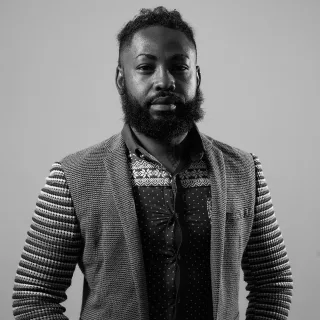
The 2026 Fields Medal (mathematics' highest honour, awarded every four years by the International Mathematical Union) went to Jacob Tsimerman, a number theorist at the University of Toronto known for his work on the André-Oort conjecture and o-minimal structures. What happened next shocked the academic world more than the medal itself: Tsimerman announced he would take leave from his tenured position at U of T to join OpenAI, where he will work on AI safety. His public argument was direct: mathematicians cannot afford to watch from the sidelines while AI systems learn to reason. They must help shape how those systems think, or accept the consequences of absence.
For those of us in Singapore who spend our days connecting employers with AI and engineering talent, Tsimerman's move is not just an interesting headline from North America. It is a signal, arguably the loudest one yet, that the AI talent war has reached the very top of the academic pyramid. When a Fields Medal winner concludes that the most impactful place to do mathematics is inside an AI lab rather than a university, every assumption about where top talent lives, what motivates it, and how to recruit it needs revisiting. This article unpacks what Tsimerman's decision means for Singapore employers navigating an already brutal AI hiring landscape.
What Exactly Happened: The Facts
Let us establish the facts cleanly, because the story has been covered with varying degrees of accuracy across outlets. Jacob Tsimerman, born in 1988, is a Canadian-Israeli mathematician who has held a tenured professorship at the University of Toronto since 2014. His research sits at the intersection of number theory, algebraic geometry, and model theory. In mid-2026, the International Mathematical Union announced Tsimerman as one of the Fields Medal recipients, the award is given to mathematicians under 40 who have made outstanding contributions to the field.
Shortly after the announcement, Tsimerman confirmed through interviews and public statements that he would be taking leave from the University of Toronto to join OpenAI. His role will focus on AI safety research, specifically on ensuring that as AI systems become more capable of complex reasoning, the mathematical foundations underpinning that reasoning are sound, verifiable, and aligned with human intent. In his own words, reported across multiple outlets including AI Weekly and tech press, Tsimerman argued that mathematicians have a responsibility to engage directly with AI development: the alternative, letting systems that increasingly attempt mathematical reasoning develop without deep mathematical oversight, is a risk the field should not accept.
This is not the first time a world-class academic has moved to an AI lab. The past three years have seen a steady stream: Ilya Sutskever left OpenAI to found SSI; Noam Brown joined OpenAI from Meta; and dozens of tenured professors at top institutions have either joined or consulted for Anthropic, Google DeepMind, and xAI. But Tsimerman's move carries a different weight. A Fields Medal winner leaving a permanent academic post sends a message to every PhD student and postdoc in quantitative fields: the gravitational centre of serious intellectual work is shifting toward industry AI labs, and the salaries, compute budgets, and impact those labs offer are pulling the best minds away from universities faster than universities can replace them.
💡 Our Expert Take
There is a tendency in Singapore to view moves like Tsimerman's as distant academic drama with no bearing on local hiring. That is a mistake. Every top researcher who leaves a university for an AI lab is one fewer person training the next cohort of AI-capable graduates. The downstream effect hits Singapore in 18 to 36 months when the pipeline of internationally trained AI specialists thins further. If you are a Singapore employer already struggling to fill AI roles (and 95% of you are, according to recent surveys) this upstream constriction is about to make your problem worse, not better.
The Scale of the Academic Brain Drain to AI
Tsimerman's departure is the most visible data point in a trend that has been building for years but is now reaching a tipping point. The pattern is consistent across disciplines: AI labs are not just hiring computer scientists any more. They are pulling in mathematicians, physicists, neuroscientists, linguists, and domain experts from every quantitative field. The common thread is that frontier AI systems now require deep expertise in areas well beyond traditional machine learning (formal reasoning, proof verification, causal inference, safety guarantees) and the people who have that expertise are overwhelmingly in academia.
The compensation gap tells part of the story. A tenured mathematics professor at a top Canadian university earns roughly CAD$150,000 to $220,000. A senior research scientist at OpenAI, Anthropic, or Google DeepMind can earn US$500,000 to over US$1 million in total compensation, with access to compute resources that no university can match. But money alone does not explain why someone at the peak of academic prestige walks away from a permanent position. The deeper pull is impact: Tsimerman explicitly framed his move as being where the work matters most. When the most prestigious mathematician of his generation says the most important place to do mathematics is inside an AI lab, it redefines what "impact" means for an entire generation of researchers.
For Singapore, the consequences of this talent flow are structural, not temporary. The city-state depends on a global pipeline of trained specialists. NUS, NTU, and SUTD produce excellent graduates, but the AI talent gap is a global problem that no single country can train its way out of when the trainers themselves are leaving academia. The 49.3% of tech vacancies in Singapore that are entirely new roles, positions that did not exist a few years ago, underscore how demand is outstripping the capacity of existing education systems to supply candidates.
Singapore's AI Talent Landscape: The Numbers That Matter
To understand why Tsimerman's move reverberates all the way to Singapore, you need to see the local numbers clearly. The situation is not hypothetical, it is measurable and acute.
95% of Singapore employers report challenges hiring tech talent. This is not a soft survey result from a vendor report, it is consistent across multiple labour market studies and reflects the lived experience of every CTO and VP of Engineering we work with. The challenge is particularly severe for AI and machine learning roles, where the intersection of deep technical skill, domain knowledge, and production engineering experience creates a candidate pool that is vanishingly small relative to demand.
49.3% of tech vacancies are entirely new roles. Nearly half the positions employers are trying to fill did not exist in their current form a few years ago. These are roles like AI safety engineer, LLM evaluation specialist, prompt engineer, ML infrastructure lead, and AI product manager. The educational pipeline was not designed to produce these profiles at scale, which means employers are competing for a self-taught and career-switching population alongside a small number of formally trained specialists.
80% of Singapore employers have dropped degree requirements. This is a structural admission that the traditional credential system cannot keep pace with demand. Employers are now evaluating candidates on demonstrated skills, project portfolios, and practical assessments rather than requiring a degree in computer science or mathematics. While this opens the talent pool, it also means hiring managers need more sophisticated evaluation methods, you cannot rely on a university transcript as a proxy for competence when the candidate may not have one.
AI skills now rank above traditional IT skills in employer demand. For the first time, the ability to work with AI systems (whether building models, fine-tuning them, deploying them in production, or evaluating their outputs) has overtaken traditional software development skills in Singapore employer priority rankings. This does not mean traditional development skills are irrelevant; it means they are necessary but no longer sufficient.
Close to 1 in 5 Singapore job postings mention AI. This figure has roughly tripled in two years. It spans sectors: not just tech companies, but financial services, healthcare, logistics, government, and education. The breadth of demand means AI talent is not just competing within a narrow tech bubble, it is being pulled in every direction simultaneously.
💡 Our Expert Take
The combination of these five data points paints a picture that Singapore employers need to internalise: demand for AI talent is broad, deep, and growing, while supply is being constricted at both ends, fewer graduates coming through a thinning academic pipeline, and the best existing talent being hoovered up by global AI labs offering compensation that local employers cannot match. The Tsimerman story is not about one mathematician. It is about the gravitational force that is pulling talent away from every institution that is not an AI frontier lab, including Singapore's own universities and employers.
Academic vs AI Lab: What Top Talent Sees
To understand why the flow of talent is one-directional, consider what a top quantitative researcher weighs when choosing between staying in academia and joining an AI lab. This comparison is not speculative, it reflects the factors we hear cited in every conversation with candidates who have both options.
| Factor | Academia | AI Lab (OpenAI, Anthropic, DeepMind) |
|---|---|---|
| Total compensation | US$120K-250K | US$400K-1M+ |
| Compute access | Grant-dependent, limited GPU clusters | Thousands of H100/B200 GPUs on demand |
| Publication freedom | Full (publish-or-perish pressure) | Restricted (proprietary research, NDAs) |
| Perceived impact | Long-horizon, cited in papers | Immediate, shipped to millions of users |
| Job security | Tenure = lifetime | At-will, but high demand means easy re-hire |
| Team calibre | Department-dependent | Concentrated world-class talent |
| Teaching load | Significant (courses, supervision) | Zero |
| Bureaucracy | High (committees, grant applications) | Lower (engineering-driven culture) |
The table makes the pull factors obvious. What is less obvious is the downstream cost: every researcher who leaves takes their graduate students' training with them. Tsimerman supervised PhD candidates at U of T. When he leaves, those students lose a supervisor who would have trained them in exactly the kind of rigorous mathematical thinking that AI safety research demands. Multiply this across hundreds of similar departures worldwide, and you begin to see why the talent pipeline into AI roles is constricting even as demand explodes.
💡 Our Expert Take
Singapore employers cannot compete with OpenAI on compensation or compute. But they can compete on two things that matter deeply to AI-capable talent: meaningful problems in a high-trust regulatory environment, and quality of life that Silicon Valley and London struggle to match. Singapore's position as a trusted AI governance hub, combined with its liveability, gives employers a genuine differentiation story, but only if they learn to articulate it. The default posture of "we pay competitive salaries" will not win in a market where the competitor is offering seven figures plus unlimited H100s.
What This Means for Singapore Employers: 4 Actions to Take Now
The academic brain drain to AI labs is not something Singapore employers can reverse. But they can adapt their hiring strategies to succeed in a market shaped by it. Here are four concrete actions we are recommending to clients right now.
1. Stop waiting for the perfect AI candidate: build them
The candidate who has three years of production ML experience, a strong mathematics background, fluency in PyTorch and transformer architectures, and familiarity with AI safety frameworks does not exist in sufficient numbers to fill your roles through external hiring alone. The government's programme targeting 1,000 AI placements is a step, but 1,000 candidates spread across an entire economy where 1 in 5 job postings mention AI is a fraction of what is needed.
The practical move: identify your strongest software engineers and invest in converting them into AI-capable engineers through structured upskilling programmes, pair them with the AI specialists you do manage to hire, and accept a 6-to-12-month ramp-up period. This is cheaper and more reliable than competing for unicorn candidates who have every global AI lab bidding for them. For engineers with strong Python foundations, the transition to AI and ML work is particularly natural.
2. Compete on purpose, not just pay
Tsimerman did not join OpenAI primarily for money, a Fields Medal winner could command premium compensation anywhere. He joined because he believes the most important mathematical work of this generation is happening inside AI safety research. Singapore employers need to find and articulate their own version of this story. What problem are you solving that an AI-capable engineer would find genuinely meaningful? What impact will their work have? The employers who can answer these questions clearly will attract talent that pure compensation offers miss.
Singapore has a particular advantage here: it is widely regarded as one of the most thoughtful jurisdictions on AI governance, with a regulatory environment that balances innovation and responsibility. For AI safety-minded talent, exactly the profile Tsimerman represents, working in a jurisdiction that takes governance seriously is a genuine draw. Use it.
3. Expand your geography ruthlessly
If the global AI talent pool is shrinking at the top due to lab absorption, and the educational pipeline is constricting because the trainers are leaving, then restricting your search to Singapore residents is an increasingly expensive constraint. The employers who are winning the AI hiring game are the ones searching globally: hiring AI and ML engineers from wherever they are and enabling them to work remotely or on flexible visa arrangements.
Singapore's Tech.Pass and Employment Pass frameworks are designed for exactly this scenario. Use them aggressively. The AI safety researcher in Berlin, the ML engineer in Bangalore, the NLP specialist in Toronto whose supervisor just left for an AI lab, these are your candidates. The competition is global, so your search must be too.
4. Build university relationships before they hollow out
The academic brain drain has not yet reached a point where Singapore's own universities are losing their core AI faculty at the same rate as North American and European institutions. NUS, NTU, SMU, and SUTD still have strong programmes. But the window to build deep relationships with these institutions (sponsoring research, hosting interns, co-supervising capstone projects, funding fellowships) is narrowing. Every year that passes without investment is a year when the talent those programmes produce flows to employers who did invest.
The most forward-thinking Singapore employers we work with are already embedded in university AI programmes, not as passive job-board advertisers, but as active participants in curriculum development, project mentorship, and research funding. This is not philanthropy, it is pipeline construction, and it is the most cost-effective long-term AI hiring strategy available.
💡 Our Expert Take
The Tsimerman story should be a wake-up call specifically for Singapore employers who think the AI talent crunch is a temporary market cycle that will self-correct. It will not. The structural forces (exponential growth in AI demand, finite supply of trained specialists, and a gravitational pull from frontier labs that no other employer can match) are all accelerating. The employers who adapt earliest will have a compounding advantage; the ones who wait for the market to normalise will find it never does.
Need AI and ML engineers in Singapore?
We help Singapore employers access pre-vetted AI engineers, ML specialists, and Python developers from Singapore and across the region, even in the tightest talent markets.
Let's TalkWhy AI Safety Talent Is the New Bottleneck
Tsimerman's specific focus area, AI safety, deserves separate attention because it represents a talent category that barely existed five years ago and is now one of the hardest to hire for globally. AI safety encompasses alignment research, evaluation and red-teaming, interpretability, formal verification of model behaviour, and the design of guardrails that prevent capable systems from producing harmful outputs. It requires a rare combination of deep technical skill, mathematical rigour, and an almost philosophical orientation toward thinking about worst-case scenarios.
For Singapore employers, AI safety talent matters even if you are not building frontier models yourself. Any company deploying AI in production (particularly in regulated sectors like financial services, healthcare, and government) needs people who can evaluate whether the AI systems they use are behaving safely and reliably. These are the people who design evaluation frameworks, build monitoring systems, and make the call on whether a model output should be trusted or flagged. They are the last line of defence between a deployed AI system and a costly failure.
The Monetary Authority of Singapore's AI governance framework, IMDA's Model AI Governance Framework, and the broader Smart Nation initiative all create regulatory context that makes AI safety talent not just nice-to-have but necessary-to-comply. As these frameworks mature, the demand for professionals who can bridge the gap between technical AI capability and governance requirements will only grow. When someone like Tsimerman chooses to work on AI safety at OpenAI rather than pure mathematics at a university, it signals that the field has reached a maturity and urgency that the best minds in the world consider worth dedicating their careers to.
Frequently Asked Questions
Who is Jacob Tsimerman and why did he join OpenAI?▼
Jacob Tsimerman is a mathematician at the University of Toronto who won the 2026 Fields Medal, the highest honour in mathematics. He is taking leave from his academic position to join OpenAI and work on AI safety. Tsimerman has argued publicly that mathematicians must engage directly with AI development to ensure future systems reason correctly and safely, rather than leaving such critical work solely to computer scientists.
How does the academic brain drain to AI affect Singapore hiring?▼
The flow of top academic talent into AI companies like OpenAI, Anthropic, and Google DeepMind shrinks the global pool of researchers who might otherwise train the next generation of AI professionals. For Singapore, where 95 percent of employers already report challenges hiring tech talent, this means the upstream pipeline of university-trained AI specialists is thinning at exactly the moment demand is surging. Employers must compete harder on compensation, purpose, and flexibility to attract the AI talent that remains available.
What percentage of Singapore job postings mention AI skills?▼
Close to one in five Singapore job postings now mention AI-related skills, according to recent labour market data. AI skills have risen above traditional IT skills in employer demand rankings, and 49.3 percent of tech vacancies are entirely new roles that did not exist a few years ago. Meanwhile, 80 percent of Singapore employers have dropped degree requirements in favour of demonstrated skills, reflecting the reality that AI competency often comes from non-traditional paths.
What is Singapore doing to address its AI talent shortage?▼
The Singapore government has launched targeted programmes aiming to place 1,000 AI professionals through upskilling and reskilling initiatives. These include partnerships with universities like NUS, NTU, and SUTD, as well as industry placement schemes. However, the structural shortage remains deep: demand for AI talent is growing faster than supply, and global competition from well-funded AI labs offering salaries that academia and most local employers cannot match continues to pull talent away from the Singapore market.
The Bottom Line
When a Fields Medal winner decides that the most important place to do mathematics is inside an AI lab working on safety, it tells you something about where the centre of intellectual gravity has moved. Jacob Tsimerman's departure from the University of Toronto to OpenAI is not an isolated career decision, it is the latest and most prominent signal of a structural realignment in which the world's best quantitative minds are migrating from universities to AI frontier labs.
For Singapore employers, this migration has direct consequences. The global pipeline of AI-trained specialists is constricting. The competition for those who remain is intensifying. The skills the market demands (AI safety, evaluation, alignment, production ML) are evolving faster than any educational system can track. And the compensation benchmarks set by frontier labs are pulling the entire salary curve upward in ways that most Singapore employers have not yet budgeted for.
The employers who will win in this environment are the ones who stop waiting for the talent market to normalise and start building their own pipelines: upskilling internal engineers, investing in university relationships, competing on purpose and governance rather than just pay, and searching globally rather than locally. The brain drain from academia to AI labs is not a trend that will reverse. It is a permanent feature of the landscape, and your hiring strategy needs to be built for it.
Build your AI team before the pipeline narrows further
HireDeveloper.sg connects you with pre-vetted AI engineers, ML specialists, and safety-aware developers across Singapore and the region. Let us help you hire the AI talent your competitors are already chasing.
Let's Talk