
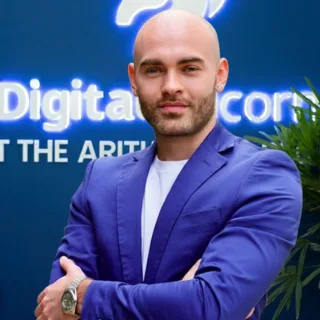
SuperAI 2026: The Biggest AI Conference Lands In Singapore
On June 10-11, 2026, SuperAI 2026 opens its doors at Marina Bay Sands in Singapore, bringing together more than 10,000 attendees from over 100 countries. The conference focuses on the transformative power of artificial intelligence, gathering visionaries, developers, startups, enterprises, researchers, and policymakers under one roof. It is, by every measure, the largest AI-focused gathering in Asia Pacific this year.
The timing is not accidental. Singapore has spent the past 18 months positioning itself as APAC’s undisputed AI capital. Google committed $5 billion to a Singapore AI cloud center. Anthropic established its APAC headquarters here. AWS expanded its Singapore AI training cluster. The government’s National AI Strategy 2.0 is in full execution. And just this week, i Light Singapore opens on June 5 with tech-art installations that underscore the city-state’s embrace of technology as cultural infrastructure. SuperAI 2026 arrives into this momentum, not creating it but concentrating it into 48 hours of structured networking, keynotes, and deal-making.
For Singapore employers with open engineering roles, SuperAI 2026 is not just a conference to attend. It is a hiring event disguised as a tech summit. Ten thousand AI-focused professionals in one building, many of them actively exploring career moves, all within walking distance of your Marina Bay or CBD office. The question is not whether this matters for your hiring pipeline. The question is whether you have a plan to convert conference attendees into candidates before they fly home.
💡 Expert Take
SuperAI 2026 is not just another conference. It is a talent density event. You have 10,000 people who self-selected as deeply interested in AI, paid for flights and hotel rooms, and voluntarily chose Singapore as their destination. That is the strongest possible signal of intent. Employers who treat this as a sourcing event — running side-dinners, hosting demo sessions at nearby venues, scheduling 1:1 meetings with speakers after panels — will generate more qualified leads in 48 hours than three months of LinkedIn outreach. The ROI on conference-adjacent hiring is 5-10x higher than cold sourcing, and most Singapore employers are not doing it at all.
Context: Singapore’s Position As The APAC AI Hub
To understand why SuperAI 2026 matters for developer hiring, you need to understand the structural forces that brought 10,000 AI professionals to Singapore specifically. This is not a conference that could happen anywhere. Singapore has built the ecosystem that makes it the natural home for a gathering of this scale.
Investment density is unmatched in APAC. Google’s $5 billion AI cloud investment is the headline, but the ecosystem runs deeper. Anthropic, OpenAI, and Mistral all have Singapore presence. AWS, Azure, and GCP operate major AI compute clusters here. More than 200 AI startups are concentrated in one-north and Punggol Digital District. The Monetary Authority of Singapore runs AI sandboxes for fintech. DBS, OCBC, and UOB are deploying AI across consumer banking at scale. Government-linked entities like GIC and Temasek are allocating billions to AI portfolio companies.
The talent pipeline reflects this investment. According to the latest workforce data, software developers are the single most in-demand role in Singapore in 2026. Not product managers. Not UX designers. Not data analysts. Software developers. And within that category, AI model development and AI literacy now rank above traditional IT skills in what employers are asking for. The skills hierarchy has inverted: knowing how to build and deploy AI systems is now more valuable than knowing how to maintain legacy enterprise applications.
Yet the supply is not keeping pace. 95 percent of Singapore firms report tech hiring challenges, a number that has barely moved in three years despite government skilling programs, university expansions, and immigration policy adjustments. The gap is structural, not cyclical. And it is widening. Meanwhile, Chinese tech companies are actively hunting AI talent on Singapore university campuses, adding competitive pressure that did not exist two years ago. For our full analysis of that dynamic, see our coverage of the China AI talent hunt on Singapore campuses.
This is the context into which SuperAI 2026 lands: explosive demand, constrained supply, intensifying competition, and 10,000 AI professionals about to spend two days in your city.
Deep Dive: What Happens At SuperAI 2026
SuperAI 2026 is structured around the transformative power of AI across industries. The conference agenda spans keynotes, panel discussions, startup showcases, developer workshops, and enterprise case studies. Attendees represent a cross-section of the AI ecosystem: founders and CTOs of AI startups, senior engineers from hyperscalers, enterprise innovation leaders, academic researchers, government policymakers, and venture capital investors.
The geographic diversity matters for hiring. With attendees from over 100 countries, the conference brings talent pools that Singapore employers cannot normally access through standard channels. Engineers from Southeast Asian AI ecosystems (Vietnam, Indonesia, Philippines), Middle Eastern tech hubs (Dubai, Riyadh), European AI centers (London, Berlin, Paris), and North American AI corridors (San Francisco, Toronto, New York) are all physically present. Many are evaluating relocation. Singapore’s Employment Pass processing time of 3-5 weeks makes it feasible to convert a conference meeting into an employment relationship within two months.
Focus areas at SuperAI 2026 include foundation model development, enterprise AI deployment at scale, AI safety and governance frameworks, agentic AI architectures, and AI-native application development. These are not abstract research topics. They map directly to the skills that Singapore employers are struggling to hire for. Every panel, every workshop, every hallway conversation is a potential sourcing signal.
For a comparison of how SuperAI 2026 relates to recent AI conferences in Singapore, see our analysis of the AI Engineer Conference in May 2026 with 2,000 attendees from OpenAI, DeepMind, and Cursor. SuperAI is five times larger and significantly broader in scope.
💡 Expert Take
The shift to skills-based hiring is the most underreported story in Singapore tech. 80 percent of tech vacancies no longer prioritize academic qualifications. That is a structural change, not a trend. It means the talent pool is dramatically larger than most TA teams realize. A self-taught developer from Vietnam with three years of production LLM deployment experience is now more hireable than a CS graduate from NUS with no AI project portfolio. SuperAI 2026 attendees skew heavily toward practitioners — people who build, not people who theorize. Employers who show up with skills assessments rather than degree requirements will have access to a talent pool their competitors are ignoring.
Impact On Employer Hiring Strategies
SuperAI 2026 compresses what normally takes months of distributed sourcing into a single 48-hour window. But capturing that value requires deliberate strategy, not passive attendance. Here is how the conference changes the hiring calculus for Singapore employers.
Talent density creates efficiency. In a normal month, a Singapore recruiter might identify 15-20 qualified AI engineering candidates through LinkedIn sourcing, referrals, and job board applications. At SuperAI, you have physical access to thousands of qualified candidates who have pre-filtered themselves by attending an AI-specific conference. The conversion funnel improves at every stage: higher response rates (face-to-face versus cold email), faster assessment (live technical conversations versus async scheduling), and stronger employer brand impressions (event presence versus LinkedIn profile).
International talent access expands dramatically. The 100+ country representation means talent from markets you do not normally source from is physically present. Engineers from Ho Chi Minh City, Jakarta, Bangalore, Lagos, and Sao Paulo — cities with strong AI engineering communities but few direct recruitment pipelines to Singapore — are all at Marina Bay Sands. For employers willing to sponsor Employment Passes, this is a sourcing goldmine.
Competitive intelligence sharpens. Your competitors are at SuperAI too. Observing which companies are running recruiting booths, hosting side events, and sending engineering leadership signals where they are in their hiring cycle. This intelligence helps you calibrate your own urgency, compensation positioning, and messaging.
The 49.3 percent newly created positions signal matters. Nearly half of all tech vacancies in Singapore are for roles that did not exist 12 months ago. These are not replacements for attrition. They are new headcount driven by AI adoption, digital transformation, and market expansion. Companies are building new AI teams from scratch, which means they need not just individual contributors but team leads, architects, and managers who can set technical direction. SuperAI attendees include exactly these senior profiles.
💡 Expert Take
The hiring pressure from Chinese tech companies on Singapore campuses is real and accelerating. ByteDance, Tencent, Alibaba, and a wave of Chinese AI startups are offering salaries 20-30 percent above local market rates to NUS, NTU, and SUTD graduates with AI specializations. Singapore employers cannot win on salary alone against Chinese tech giants. Where they can win is on career trajectory, work-life integration, IP environment, and the breadth of the Singapore AI ecosystem. SuperAI 2026 is the perfect venue to make that case in person. Show candidates the full picture: Google, Anthropic, AWS, 200+ startups, government backing, English-language environment, rule of law. That narrative is more compelling than a 25 percent salary premium at a company where the engineering org is 8,000 kilometers away.
What This Means For You: 5 Action Points
If you are a Singapore employer with open AI, data, or software engineering roles, here are five concrete actions to take before, during, and after SuperAI 2026.
1. Pre-conference outreach (now through June 9). Identify speakers, panelists, and workshop leaders whose technical profiles match your open roles. Send personalized LinkedIn messages referencing their specific conference session. Propose a 20-minute coffee meeting at Marina Bay Sands during conference breaks. Senior engineers respond to peer-level outreach, not recruiter spam. Have your CTO or VP Engineering send the message, not your TA coordinator.
2. Conference-adjacent events (June 9-12). Book a private dining room at a Marina Bay restaurant for the evening of June 10. Invite 15-20 high-priority candidates for an informal dinner with your engineering leadership. No pitch decks. No corporate videos. Just technical conversation over good food. The cost is SGD 3,000-5,000 for a dinner that replaces SGD 30,000 in sourcing fees. Host a technical demo or workshop at a nearby co-working space on June 9 (pre-conference) or June 12 (post-conference) to attract attendees who arrive early or stay late.
3. On-site engagement strategy (June 10-11). If your company has a booth or sponsorship, staff it with engineers, not marketers. Candidates at AI conferences want to talk to people who write code, not people who write copy. Prepare a live technical demo of your AI product or infrastructure. Have your most senior AI engineer available for 1:1 conversations. Collect structured notes on every interaction: skills, experience, interest level, timeline, EP eligibility.
4. 48-hour follow-up protocol (June 12-13). Every contact made at SuperAI 2026 should receive a personalized follow-up within 48 hours of the conference closing. Not a mass email. A specific message referencing what you discussed, what role matches their profile, and a proposed next step (technical assessment or hiring manager call). Response rates on post-conference follow-ups run 40-60 percent versus 5-8 percent on cold outreach. The window closes fast: by June 16, most candidates will have received 5-10 competing follow-ups and will start filtering.
5. Fast-track interview pipeline (June 13-27). Compress your interview process to 14 days for SuperAI-sourced candidates. Day 1-3: recruiter screen plus EP eligibility check. Day 4-7: technical assessment (async coding challenge or live session). Day 8-10: hiring manager and team interviews. Day 11-14: offer decision and package preparation. Any process longer than 21 days loses 60 percent of conference-sourced candidates. They are in demand. They know it. Speed is your competitive advantage. For AI/ML specific assessment techniques, reference our guide on hiring AI/ML engineers in Singapore.
Need Help Building Your SuperAI 2026 Hiring Pipeline?
HireDeveloper.sg runs conference-to-hire campaigns for Singapore employers. We handle pre-conference outreach, on-site candidate engagement, 48-hour follow-ups, and 14-day interview coordination. Active pipelines from SuperAI 2026, AI Engineer Conference, and the broader 2026 displaced talent pool. EP-eligible candidates, skills-assessed, ready to interview.
Book a hiring strategy callPredictions: What Comes After SuperAI 2026
SuperAI 2026 is not an endpoint. It is an accelerant. Here is what we expect to happen in the 90 days following the conference, based on patterns from previous APAC tech conferences and the current market dynamics.
Prediction 1: Post-conference hiring spike in July-August 2026. Every major tech conference in Singapore produces a measurable hiring spike 4-8 weeks later. ATxSummit historically drives a 15-20 percent increase in EP applications in the following quarter. SuperAI is five times the size of previous AI-specific conferences and lands during a period of peak hiring demand. We expect a 25-35 percent increase in AI-related EP applications in July-August 2026, creating processing backlogs that reward employers who file early.
Prediction 2: Salary benchmarks for AI roles will shift upward. When 10,000 AI professionals converge, they compare compensation. Conference hallway conversations are the most efficient mechanism for market-rate recalibration. Expect Singapore AI engineer salary expectations to increase 10-15 percent for offers made after June 15, as candidates arrive with updated market intelligence from SuperAI conversations. Employers who extend offers before or during the conference lock in current rates.
Prediction 3: Three to five new AI startups will announce Singapore office openings. SuperAI 2026 will showcase Singapore’s ecosystem to hundreds of international AI startup founders. Several will decide during or immediately after the conference to establish Singapore as their APAC base. These new entrants will compete directly for the same engineering talent pool, further tightening supply. First-mover advantage for existing Singapore employers narrows with each new competitor.
Prediction 4: Skills-based hiring becomes the permanent default for AI roles. The 80 percent of tech vacancies that already do not prioritize academic qualifications will become 90 percent by end of 2026. SuperAI 2026 will showcase dozens of practitioners whose skills were developed through open-source contribution, bootcamps, and on-the-job experience rather than traditional CS degrees. The evidence that skills-based hiring produces superior outcomes for AI roles is becoming overwhelming, and the conference will amplify that signal.
💡 Expert Take
My bold prediction: the companies that hire most effectively from SuperAI 2026 will not be the ones with the biggest booths or the most sponsorship dollars. They will be the ones whose CTOs personally showed up, had real technical conversations, and followed up within 24 hours with a specific role and a clear interview timeline. Conference hiring is a founder-mode activity. If you send your TA team without engineering leadership, you will generate leads. If you send your CTO with your TA team, you will generate hires. The difference is 3x in conversion rate. I have seen it across every major APAC conference since 2019.
FAQ: SuperAI 2026 And Singapore Developer Hiring
What is SuperAI 2026 and when does it take place?
How does SuperAI 2026 impact developer hiring in Singapore?
What skills are most in demand for Singapore employers in 2026?
How can Singapore employers compete for AI talent against Chinese tech firms?
Free SuperAI 2026 Hiring Strategy Audit (30 minutes)
A senior HireDeveloper.sg recruiter maps your open AI and engineering roles against the SuperAI 2026 attendee profile, designs a conference-to-hire pipeline, and builds a 48-hour follow-up sequence. Written recommendation in 24 hours. No commitment.
Book the audit