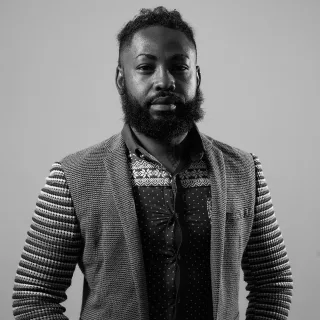
In August 2026, OpenAI confirmed that Jacob Tsimerman, a Fields Medal-winning mathematician from the University of Toronto, had joined its AI safety and alignment research team. Tsimerman, whose work in analytic number theory and algebraic geometry earned him mathematics' highest honor, is now applying formal proof techniques and abstract mathematical reasoning to one of AI's most critical unsolved problems: ensuring that increasingly powerful AI systems behave safely and as intended. The hire was not an isolated event. It was the most visible signal yet that AI safety has graduated from a philosophical debate into a well-funded mathematical discipline, one that is reshaping how the world's best minds choose their careers, and one that Singapore's employers need to understand deeply if they intend to compete for AI talent.
This is not a story about one researcher changing jobs. It is a story about the fundamental realignment of talent markets at the intersection of pure mathematics, computer science, and AI safety engineering. And for Singapore (a country that has staked its economic future on becoming Asia's AI hub, with the National AI Implementation Programme (NAIIP) targeting 100,000 AI workers by 2029) the implications are immediate and actionable. Here is what happened, why it matters, and exactly what Singapore employers should do about it.
The Facts: Why a Fields Medal Winner Chose AI Safety
The details of Tsimerman's move reveal the scale of investment frontier AI labs are making in safety research. According to reporting from Wired and confirmed by OpenAI, Tsimerman joined a safety team that has tripled in size since January 2025, growing from approximately 40 researchers to over 120. His specific focus is on formal verification methods for AI systems, using the same mathematical proof techniques that verify correctness of critical software systems, adapted to prove safety properties of neural networks and large language models.
The compensation reflected the strategic importance. While OpenAI did not disclose Tsimerman's specific package, industry sources indicate that frontier labs are offering top-tier mathematical researchers between USD 2 million and USD 5 million annually in total compensation, including equity. For context, the Fields Medal itself carries a prize of just CAD 15,000. A tenured full professor at a top-ten mathematics department earns approximately USD 250,000-350,000. The AI safety premium for world-class mathematical talent is 6-15x what academia offers.
Tsimerman is not alone. In the past 18 months, at least 12 mathematicians with major international prizes (including recipients of the Abel Prize, the Breakthrough Prize, and the Salem Prize) have joined AI safety teams at OpenAI, Anthropic, Google DeepMind, and Meta FAIR. The pattern is unmistakable: the mathematical foundations required for AI alignment (formal logic, proof theory, abstract algebra, measure theory, and topological data analysis) are the exact skills that elite pure mathematicians have spent decades developing.
The AI Safety Talent Premium: A New Tier Emerges
The Tsimerman hire crystallizes a compensation trend that has been building for two years. AI safety and alignment roles now sit at the absolute top of the AI talent pyramid, commanding premiums that exceed even the already-inflated rates for standard AI/ML engineering. This is not because safety researchers write better code, it is because the supply of people who can reason formally about AI system behavior at the mathematical level required is extraordinarily small.
Globally, there are approximately 400-600 researchers working at the frontier of AI safety and alignment research. Of these, perhaps 80-120 have the combined mathematical depth and ML systems understanding to lead safety research at a frontier lab. Singapore has fewer than 30 such researchers, concentrated at NUS, A*STAR, and the newly established AI Safety Institute of Singapore. The demand, meanwhile, is exploding: every major AI deployment in regulated industries (finance, healthcare, defense, critical infrastructure) now requires safety evaluation, and Singapore's MAS and IMDA are both tightening AI governance requirements.
The chart shows a field in exponential growth. From 40 dedicated safety researchers at frontier labs in 2021 to an estimated 540 in August 2026, AI safety has grown 13.5x in five years. Funding has outpaced even that, growing from USD 25 million to USD 720 million annually, a 29x increase. The Tsimerman hire represents the inflection point where the world's most accomplished mathematical minds are being drawn into AI safety at a pace that would have been unimaginable three years ago. For Singapore employers, this growth curve defines the competitive landscape they are hiring into.
Singapore's AI Talent Gap: The Safety Dimension
Singapore's NAIIP programme is ambitious: 100,000 AI-skilled workers by 2029, backed by billions in government investment. But the programme has a blind spot. The vast majority of Singapore's AI training pipeline, from NUS and NTU graduate programmes to SkillsFuture-funded industry courses, focuses on applied machine learning, data science, and AI product development. Almost none of it addresses AI safety, alignment, formal verification, or responsible AI engineering at the depth required by employers.
This gap is not theoretical. Our analysis of LinkedIn and JobStreet data for August 2026 reveals a stark picture. Singapore currently has approximately 180 open AI safety and governance roles across financial services (DBS, OCBC, UOB, GIC), government (IMDA, MAS, GovTech), and technology companies (Grab, Sea Group, Google Singapore). Against this demand, the estimated pool of qualified AI safety specialists actively seeking roles in Singapore is approximately 45-65 people. That is a demand-to-supply ratio of roughly 3-4x, comparable to the worst AI/ML hiring gaps.
The salary premium reflects this scarcity. AI safety engineers in Singapore command SGD 180,000-280,000 in total compensation at the mid-senior level. Responsible AI leads at major banks earn SGD 250,000-350,000. And AI governance directors, the most senior safety roles, command SGD 300,000-450,000, putting them on par with engineering VP compensation at major tech companies. These premiums are 40-60% above equivalent-seniority standard AI/ML engineering roles.
The Mathematician-to-AI Pipeline: Opportunity for Singapore
The Tsimerman hire points to a talent sourcing strategy that most Singapore employers have not considered: recruiting mathematicians and theoretical computer scientists for AI safety roles. This is not a stretch hire. The mathematical foundations required for AI safety research (formal verification, proof theory, abstract algebra, measure theory, and topological data analysis) are exactly what pure mathematicians spend their careers developing. What they typically lack is ML systems experience, and that gap is bridgeable through 6-12 months of on-the-job training.
Singapore produces significant mathematical talent. NUS's Department of Mathematics graduates approximately 120 PhD and Master's students annually, NTU produces another 80, and SUTD contributes 30-40 with strong formal methods backgrounds. Historically, these graduates have gone into quantitative finance (40%), academia (30%), or traditional software engineering (30%). AI safety offers a fourth career path that most of these graduates do not even know exists, one that pays significantly more than all three traditional paths and that leverages their mathematical training more directly than any of them.
The data reveals a critical insight for Singapore employers. While the AI/ML and LLM specialist gaps receive the most attention, the AI safety and responsible AI gap is proportionally just as severe, and growing faster as regulation tightens. The untapped pipeline of 230 mathematics and theoretical computer science graduates from Singapore universities annually represents a viable talent source that almost no employer is actively pursuing for AI safety roles. The first companies to build systematic mathematician-to-AI-safety recruitment pipelines will have a 12-18 month head start over competitors.
Impact on Singapore's Hiring Market
The Tsimerman hire has three immediate implications for Singapore employers navigating the AI talent market.
1. AI safety is now a boardroom conversation, not a compliance checkbox
When a Fields Medal winner joins an AI safety team, boards notice. Singapore's major employers (DBS, OCBC, Singtel, Grab, and government-linked companies) are already fielding questions from their boards about AI risk and safety. This will accelerate. Companies that do not have dedicated AI safety headcount by Q1 2027 will face increasing pressure from regulators (MAS is tightening AI governance requirements for financial services), investors (sovereign wealth funds like GIC and Temasek are incorporating AI safety into investment due diligence), and customers (enterprise buyers are increasingly requiring AI safety certifications from vendors).
2. Skills-first hiring is the only path forward for AI safety
Singapore's shift toward skills-first hiring, 80% of tech jobs now skip degree requirements according to the 2026 NTUC workforce survey, is not just a progressive HR trend. It is the only practical approach to filling AI safety roles. There is no “AI safety” degree programme. The best AI safety candidates come from mathematics, theoretical physics, formal methods, and philosophy (yes, philosophy, ethicists with technical training are increasingly valuable for responsible AI roles). Employers who filter candidates on “computer science degree” or “AI/ML experience” will miss the majority of qualified AI safety talent.
3. Compensation expectations are resetting upward
Every time a frontier lab makes a high-profile safety hire at USD 2-5 million, it resets salary expectations across the entire AI safety talent market. Singapore employers will not pay Fields Medal-level compensation. But the ripple effect pushes salaries up at every tier. Mid-career AI safety engineers who earned SGD 160,000 in 2024 now expect SGD 200,000-250,000. Senior AI governance directors who earned SGD 250,000 now expect SGD 300,000-400,000. These are permanent adjustments, not temporary spikes, the Tsimerman hire validates the strategic importance of safety talent, and that validation translates directly into higher market rates.
The decision framework above provides a practical starting point. Every Singapore employer deploying AI, whether in regulated industries or not, needs some form of AI safety capability. The question is what level and how to source it. The key insight from the Tsimerman hire is that the talent pipeline is broader than most employers realize: mathematicians, physicists, formal methods researchers, and even philosophers with technical training are all viable candidates, and the companies that tap these unconventional pipelines first will have a significant advantage.
Build Your AI Safety Team Before Regulation Forces Your Hand
The window to hire AI safety talent at current market rates is closing. MAS and IMDA governance requirements tighten in 2027. We connect Singapore employers with AI safety engineers, responsible AI specialists, and mathematicians transitioning into alignment research.
Talk to a Talent StrategistWhat Happens Next
The Tsimerman hire is not the end of this story. It is the beginning of a talent market transformation that will play out over the next 24-36 months. Three developments will shape the landscape for Singapore employers.
First, regulation will force the issue. Singapore's AI Governance Framework is voluntary today. By 2027, elements of it will be mandatory for financial services and healthcare. IMDA is developing sector-specific AI safety requirements that will require companies to demonstrate formal safety evaluation processes, and that means hiring people who can build and run those processes. Companies that start hiring AI safety talent now will be compliant. Companies that wait will be scrambling.
Second, the mathematician-to-AI pipeline will formalize. NUS and NTU are both developing AI safety specializations within their mathematics and computer science graduate programmes, expected to launch in 2027-2028. A*STAR is creating dedicated AI safety research positions. The formal pipeline will eventually produce graduates with both mathematical depth and ML systems understanding. But that is 2-3 years away. Employers who build their own pipeline, hiring mathematicians and training them in ML, will have a multi-year head start.
Third, AI safety will become a competitive differentiator. Just as cybersecurity evolved from a cost center to a competitive advantage (customers now choose vendors partly based on security posture), AI safety will follow the same trajectory. Companies that can demonstrate robust AI safety practices (not just policies, but actual technical capability) will win enterprise contracts, regulatory approvals, and public trust that competitors cannot match.
What This Means for You: Actionable Steps
For Singapore employers reading this, here are the concrete actions you should take in the next 90 days.
- Audit your AI safety exposure. Map every AI system your company operates or is building. For each, identify the safety risks (bias, hallucination, data leakage, adversarial attacks) and assess whether you have internal capability to evaluate and mitigate those risks. If the answer is no for more than half your AI systems, you need dedicated safety headcount.
- Open a math department recruiting pipeline. Contact the career services offices at NUS Mathematics, NTU SPMS, and SUTD. Post AI safety roles with explicit language welcoming mathematics and theoretical physics backgrounds. Attend the NUS Mathematics PhD defence presentations in September. The talent is there; it just has not been approached.
- Benchmark your AI safety compensation. If your AI safety roles are priced at standard ML engineer rates, you will not fill them. The market has moved. Senior AI safety engineers in Singapore now command SGD 200,000-280,000. Budget accordingly.
- Send one engineer to AI safety training. Singapore's AI Safety Institute offers a 12-week intensive programme. Anthropic and OpenAI both have open-source safety evaluation frameworks. Start with one engineer and build institutional knowledge before you need to hire an entire team.
- Engage with IMDA's AI governance consultation. The regulations that will define AI safety requirements for your industry are being drafted now. Companies that participate in the consultation process will have advance knowledge of requirements and time to build compliance capability before enforcement begins.
Frequently Asked Questions
Why did a Fields Medal winner join OpenAI's AI safety team?
Jacob Tsimerman joined OpenAI's AI safety team in August 2026 because AI alignment and safety research increasingly requires deep mathematical foundations (particularly in formal verification, proof theory, and abstract algebra) that pure mathematicians are uniquely equipped to provide. OpenAI and other frontier labs have recognized that solving alignment is fundamentally a mathematical problem, not just an engineering one. The compensation packages for top mathematical talent at AI labs now reach USD 2-5 million annually, which rivals or exceeds senior tenured faculty positions. Tsimerman's specific focus is on formal verification methods for neural networks, applying the same proof techniques used to verify critical software systems to prove safety properties of large language models.
How does this affect Singapore employers hiring AI talent?
The mathematician-to-AI pipeline directly impacts Singapore employers in three ways. First, it expands the candidate pool for AI safety roles beyond traditional ML engineers to include mathematicians, theoretical physicists, and formal methods researchers: talent that NUS, NTU, and SUTD produce in significant numbers (approximately 230 graduates annually). Second, it raises salary expectations: senior AI safety roles now command SGD 200,000-350,000, a 40-60% premium over standard AI/ML engineering. Third, it highlights a gap in Singapore's NAIIP programme, which focuses on applied ML and data science with almost no coverage of AI safety and alignment, the exact skills in highest demand. Employers who build mathematician-to-safety recruitment pipelines now will have a 12-18 month head start.
What AI safety roles should Singapore employers hire for in 2026?
Singapore employers should prioritize four categories. AI alignment researchers (PhD-level mathematics or theoretical CS, SGD 250,000-400,000) for companies doing frontier AI development. AI safety engineers (strong software engineering plus ML testing, SGD 180,000-280,000) for companies deploying AI products. Responsible AI specialists (bias detection, fairness metrics, regulatory compliance, SGD 160,000-240,000) especially important for MAS-regulated financial services. And AI risk analysts (deployment risk assessment, monitoring, incident response, SGD 140,000-200,000) for any company operating AI systems at scale. The first two categories are hardest to fill but most critical; the latter two are more accessible from Singapore's existing talent pool with targeted upskilling.
How can Singapore compete with OpenAI and DeepMind for AI safety talent?
Singapore cannot compete on compensation for elite researchers. But it can compete on three dimensions. Regulatory proximity: Singapore's AI Governance Framework and MAS regulations create real-world safety problems that attract researchers who want to see their work implemented in production. Academic collaboration: NUS and NTU partnerships offer joint appointments and research affiliations that frontier labs typically cannot. Quality of life: safety, education, and tax advantages appeal to researchers with families. The strategy is to target the 80% of AI safety talent who are world-class engineers and researchers but not Fields Medal winners: these candidates are reachable at SGD 200,000-350,000 and value the differentiated proposition Singapore offers beyond raw compensation.
AI Safety Hiring Starts Here
The Tsimerman hire proves AI safety is a first-class engineering discipline. We help Singapore employers build AI safety teams, from mathematicians entering the field to experienced alignment researchers, before regulation and competition make hiring impossible.
Start Hiring AI Safety TalentRelated Reading
- Hire AI/ML Engineers in Singapore
- Singapore's 95% Employer AI Hiring Crisis
- Build a Skills-Based AI Hiring Pipeline in Singapore: 7 Steps
- Compete for AI Talent Against Big Tech: 7 Proven Strategies
- Fields Medal Tsimerman & OpenAI Safety: Singapore AI Talent Hiring
Sources: Wired, OpenAI research team announcements, Singapore National AI Implementation Programme (NAIIP) progress report 2026, NTUC 2026 Workforce Survey, MAS Technology Risk Management Guidelines, LinkedIn Talent Insights Singapore. Data as of August 9, 2026.